
Technology & Art
Becoming a Private Pilot
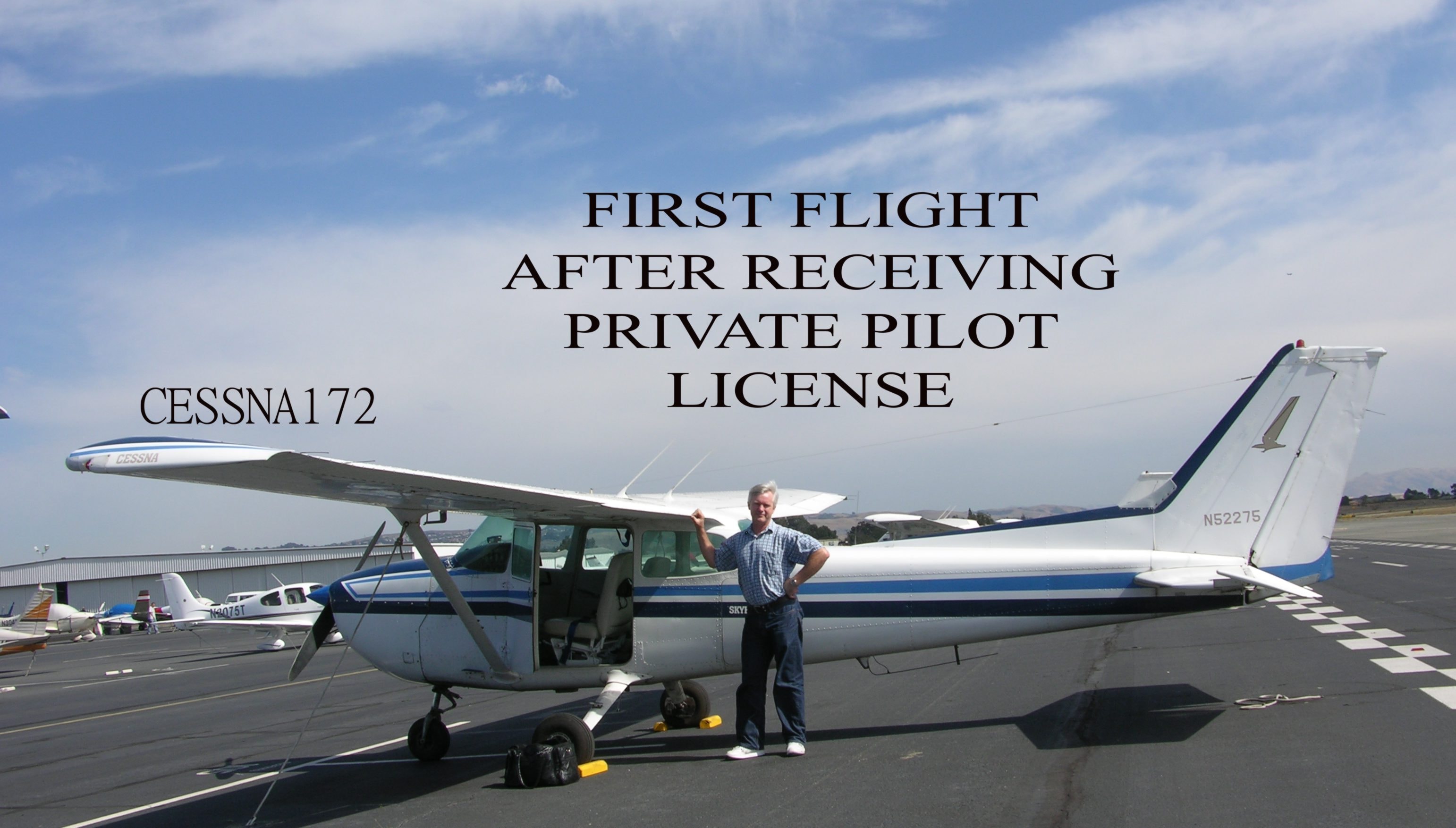
I have studied and practiced with the goal of becoming a private pilot. To receive a private pilot license, one must pay, know, and fly — and each of those three words conceals a world of detail.
Cost of a Private Pilot License
The cost to acquire a private pilot license can be at least about $10,000 — and often considerably more. A rough accounting: 40 hours of aircraft rental at $150/hr comes to $6,000; 60 hours of instructor time at $60/hr adds $3,600; 40 hours of aviation fuel at 8 gal/hr at $7/gal is $2,240; personal flight equipment (basic headset, flight bag, charts) runs about $600; and study books, a medical exam, and license fees add another $450 — for a total around $13,000. These costs can climb higher. If it takes the average 60 hours to become proficient enough to pass the practical test, the total can easily exceed $16,000.
The Knowledge Test
The Federal Aviation Administration (FAA) tests pilots on knowledge required by Title 14 Chapter 1, Parts 1 to 91 — in particular, Part 61. The private pilot test for fixed-wing aircraft can be taken at 15 years of age and includes 60 questions to be answered in 150 minutes. A passing score is 70% or better. The Knowledge Test covers Flight Instruments, Navigation Enroute, Aircraft Performance, Weather Service, Weather Procedures, Communication Procedures, Airport Operations, Aircraft Systems, Basic Aerodynamics, and Federal Regulations. A list of exemplary test questions can be viewed at the FAA Airmen's test page. You can learn the answers using textbooks and from your instructor.
The Flight Test
After at least 40 hours of flight time, a medical certification, and a passing Knowledge Test score, a candidate can take a flight test for certification by an FAA Inspector. The Inspector will review your Knowledge Test results for weak points and give you an oral examination. If satisfied, you will go out to your aircraft for a practical flight to see whether your skills and procedures meet the Practical Test Standards. Throughout, the Inspector evaluates Preflight Preparation, Preflight Procedures, Airport Base Operations, Takeoffs, Landings, Performance Maneuvers, Navigation, Slow Flight and Stalls, Basic Instrument Maneuvers, Emergency Operations, Night Operations, and Postflight Procedures.
The Instrument Panel
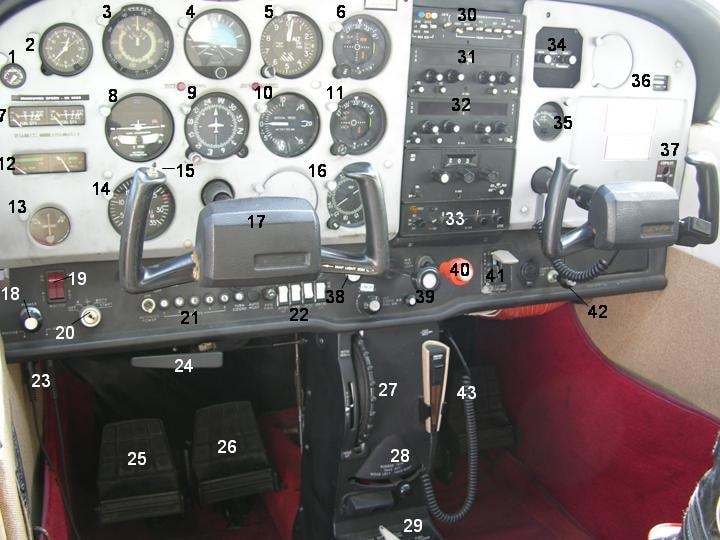
A typical Cessna instrument panel is a study in organized complexity. The primary flight instruments — airspeed indicator, attitude indicator, altimeter, turn coordinator, heading indicator, and vertical speed indicator — are arranged in the standard "six-pack" layout. Navigation radios, the transponder, and engine gauges fill the remaining space. Learning to scan the panel efficiently, cross-checking instruments without fixating on any single one, is one of the core skills of instrument flying and a habit that carries over into every other aspect of piloting.
Light Sport Certificate
A Light Sport Aircraft (LSA) certificate is a lower-cost, lower-complexity alternative to the full private pilot license. It requires fewer flight hours, a simpler written test, and a less demanding medical standard — a valid driver's license suffices in place of an FAA medical certificate. The tradeoff is that LSA pilots are limited to aircraft under 1,320 lbs, daytime VFR flight, and a maximum of one passenger. For many pilots, especially those who fly recreationally in good weather, the sport certificate is a practical and affordable path to the sky.
Three Words
Pay, know, fly. Each step has its own demands and its own rewards. The cost is real, the study is serious, and the flight test is genuinely challenging. But there is nothing quite like the moment the examiner shakes your hand and says you passed — and you walk out to the ramp knowing that the sky is now, in a meaningful sense, yours.